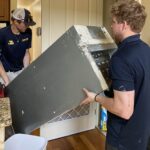
A tankless water heater heats water only when you open a tap, so you get a steady supply of hot water without a 50-gallon tank keeping water hot all day. IMS Heating, Air, Plumbing & Electrical’s licensed plumbers install, repair and maintain gas and electric tankless water heaters for homes in Loveland, CO and nearby communities, with upfront pricing and a 100% money-back guarantee. Call (970) 913-0868 to talk through your options.
How a Tankless Water Heater Works
When you turn on a hot water tap, cold water flows into the unit and a flow sensor signals the burner or electric elements to fire. Water passes through a heat exchanger and comes out at the set temperature. When you turn the tap off, the unit shuts down. There’s no stored water losing heat between uses, which is where most of the energy savings come from.
Benefits of Going Tankless
- Continuous hot water. Back-to-back showers no longer drain the supply, as long as the unit is sized for your household’s demand.
- Lower standby energy use. Without a tank to keep hot, a tankless unit uses energy only when you need hot water.
- Smaller footprint. A wall-mounted unit frees up floor space in a utility room, garage or basement.
- Longer service life. With regular descaling, many tankless units last 20 years, compared with 8 to 12 years for a typical tank.
- Fewer flooding risks. There’s no large tank that can rupture and release 40 or 50 gallons of water.
Is Tankless Right for Your Home?
Tankless isn’t the best fit for every house. The upfront cost is higher than a tank, and switching often requires a larger gas line, new venting or an electrical upgrade. Before we recommend one, we look at:
- How many people live in the home and how many fixtures run at the same time
- Your incoming water temperature, which drops in Northern Colorado winters
- Gas line size and meter capacity for a gas unit
- Electrical panel capacity for an electric unit
- Venting routes and where the unit can be mounted
If a tank is the better value for your home, we’ll tell you. Our water heater installation and repair page covers gas, electric and heat pump tank options. For a side-by-side look, read our guide to tankless vs. traditional water heaters.
Gas vs. Electric Tankless
Gas tankless units deliver higher flow rates, which makes them the usual choice for whole-home hot water in larger households. Electric tankless units need no venting and work well for smaller homes, additions or point-of-use installations under a single sink. Whole-home electric models often require a significant electrical service upgrade, so we check your panel before recommending one. We’ll suggest the type that fits your home’s utilities and hot water needs.
Tankless Water Heater Installation
A tankless unit only performs as well as it’s installed. Every installation from IMS includes correct sizing for flow rate and temperature rise, gas piping sized for the unit’s full input, venting that meets the manufacturer’s requirements, isolation valves for future descaling and a full test run at multiple fixtures before we leave. Ask about our financing options if you’d like to spread out the cost.